Recycling and Sustainability at Landscaping Seven Kings
 At Landscaping Seven Kings, sustainability is not treated as an extra feature; it is part of how every project is planned, delivered, and reviewed. From garden clearances to planting schemes and regular maintenance, our approach to recycling in landscaping is designed to reduce waste, recover useful materials, and support cleaner local environments. We work with a clear recycling percentage target of 90% of green waste and reusable site materials being diverted from landfill, with progress monitored across jobs so that improvements can be measured rather than assumed.
The Seven Kings area sits within a wider network of London boroughs that increasingly favour careful waste separation, and that local mindset shapes our work. Soil, timber, hardcore, metal fixings, plastic plant containers, and organic matter are separated as far as practical so they can move into the right recycling or recovery stream. In many neighbourhoods, borough collections and transfer systems place emphasis on sorting recyclables before they become mixed waste, and our Landscaping Seven Kings recycling process follows the same principle: keep useful material clean, sorted, and suitable for the next stage of treatment.
 A major part of our sustainability strategy is using local transfer stations and licensed waste facilities wherever possible. This helps reduce journey distances, cut fuel use, and keep the disposal trail transparent. Green waste such as branches, leaves, turf, and hedge cuttings can often be sent for composting or biomass recovery, while inert materials and construction offcuts are directed to appropriate processing sites. By choosing nearby transfer points, Landscaping Seven Kings lowers the carbon impact of each project while supporting a more efficient local waste economy.
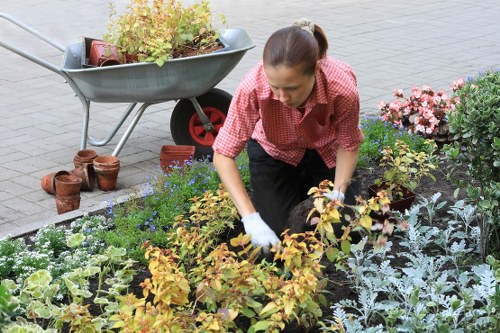
Our recycling activity also reflects the types of work commonly carried out in the area. During soft landscaping and garden renovations, old topsoil may be screened and reused where suitable, rather than automatically replaced. Broken paving, edging stones, and concrete fragments are separated from organic waste so they can be handled as mineral waste rather than contaminated general rubbish. Even in smaller domestic gardens, careful sorting matters: mixed bags of waste are avoided, and reusable items such as terracotta pots, trellis sections, and untreated timber are checked before disposal. This practical method strengthens recycling practices while keeping projects tidy and efficient.
 We also believe that sustainability goes beyond the site itself. Landscaping Seven Kings supports partnerships with local charities so that suitable items can be reused rather than discarded. Usable planters, garden furniture, hand tools, decorative stone, and surplus timber may be offered to community groups, charity gardens, and reuse schemes when they meet safety and quality standards. This helps extend the life of materials that still have value, while also benefiting organisations that rely on affordable supplies to improve shared outdoor spaces, learning gardens, and neighbourhood projects.
Partnerships with charities are especially important when clearing larger gardens, where one person’s surplus can become another group’s resource. Instead of sending everything to disposal, we assess whether items can be repaired, cleaned, or redirected for second use. This includes reusable sleepers, solid shelving, empty but intact containers, and some metal fixtures. In a borough where residents increasingly expect responsible waste handling, these partnerships show that Landscaping Seven Kings sustainability can create social value as well as environmental gains. Reuse reduces demand for new materials and supports a circular approach that feels practical and community-minded.
Our vehicle policy is another important part of the picture. We use low-carbon vans to reduce emissions during travel between sites, transfer stations, and supplier locations. These vehicles are selected for efficiency and are scheduled to minimise unnecessary mileage, which makes a noticeable difference across busy maintenance calendars. For heavier loads, routes are planned to avoid repeated trips, and crews are encouraged to combine collections whenever possible. In this way, low-carbon landscaping vans support the wider aim of reducing the footprint of each job without compromising reliability.
 Fuel-conscious logistics also help us make better use of time and materials. When waste is sorted correctly on site, loading is quicker and fewer return trips are needed. When the correct transfer station is chosen early in the process, crews can avoid detours and reduce congestion-related delays. In a London setting where traffic, parking, and access can all affect efficiency, this disciplined approach to scheduling is a simple but effective way to lower emissions. It also helps maintain a cleaner working environment, because materials are less likely to be mixed or damaged in transit.
 Looking ahead, Landscaping Seven Kings will continue to refine its recycling and sustainability standards, with the recycling percentage target remaining a clear benchmark for progress. We will keep prioritising local transfer stations, strengthening charity partnerships, and expanding the use of low-carbon vans wherever operationally possible. Just as important, we will continue to follow the boroughs’ evolving approach to waste separation by keeping materials sorted, traceable, and prepared for reuse or recovery. For us, sustainable landscaping is not a single policy; it is a daily practice that shapes every stage of the work and contributes to a greener Seven Kings.